Forget the Neighbors: Why Turkey’s Future Strategic Partner is Vietnam
Turkey trades with the Middle East (volatile) and Europe (stagnant). Vietnam trades with China (predatory). Both countries are "Empire Builders" trapped in bad neighborhoods. They need each other.
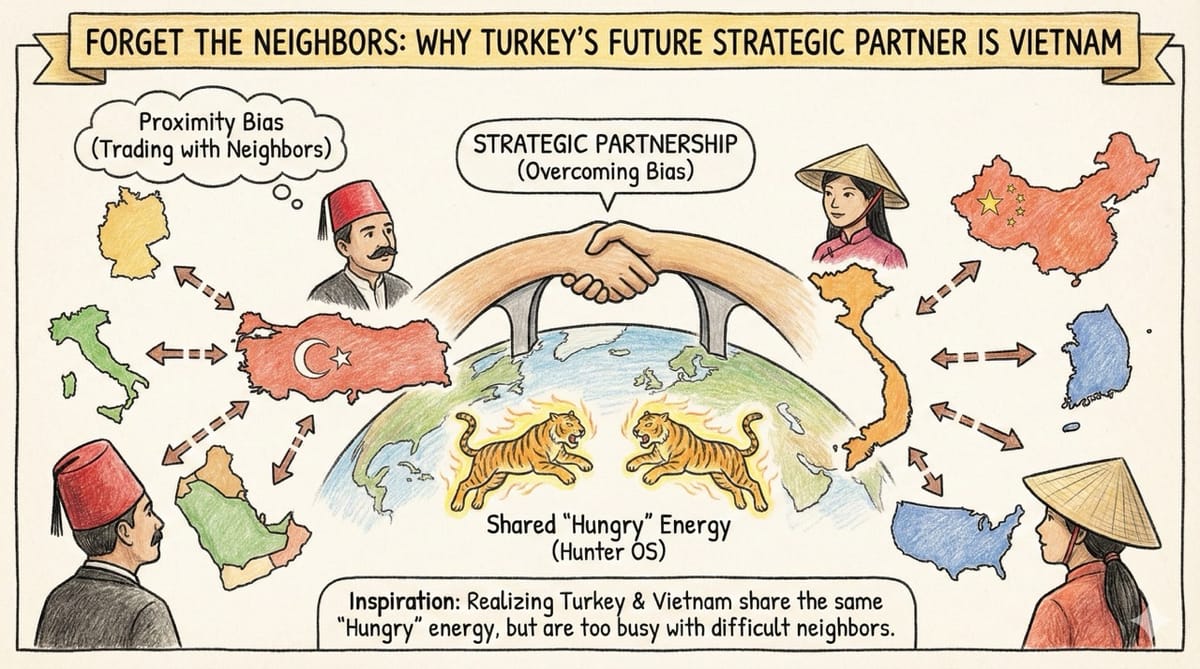
We suffer from "Proximity Bias." We trade with who is close, not who is compatible. Turkey and Vietnam are the perfect economic mirror images, if only they looked past their own borders.
Inspiration: Realizing that Turkey and Vietnam share the same "Hungry" energy (The Hunter Operating System), yet they barely talk to each other because they are too busy managing their difficult neighbors.
In trade, we usually follow the map. We trade with who is close.
Turkey focuses on Europe (Germany, Italy) and the Middle East (Iraq, UAE). Vietnam focuses on China, South Korea, and the US.
This is Proximity Bias. And it is a mistake.
Just because a country is close doesn't mean it's a good partner. Often, neighbors come with historical baggage, border disputes, and cultural friction.
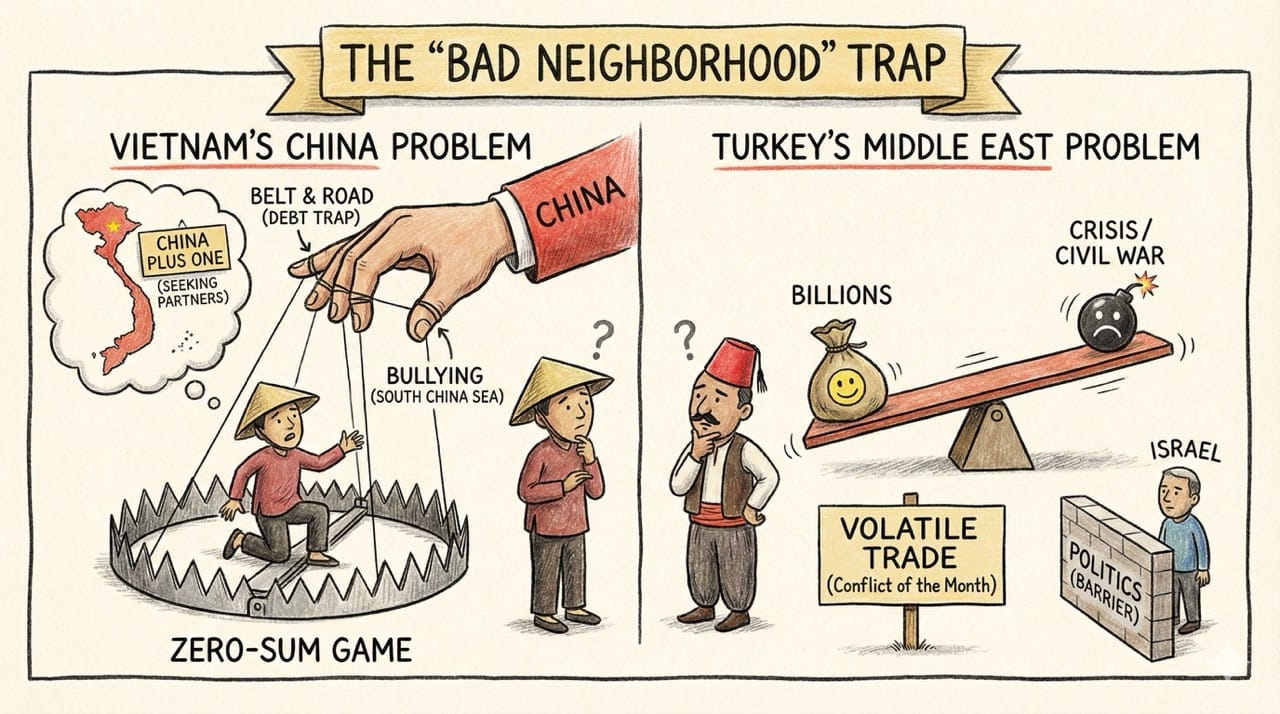
The "Bad Neighborhood" Trap
Both nations are over-invested in regions that don't have their best interests at heart.
Vietnam’s China Problem: Vietnam's biggest partner is China. But China plays a Zero-Sum Game.
Belt and Road Initiative: It’s often a debt trap designed to extract strategic assets.
Geopolitics: China bullies neighbors in the South China Sea. Vietnam knows this. They are actively seeking the "China Plus One" strategy—moving manufacturing away from Beijing's grip. They need partners who aren't trying to map their territorial waters.
Turkey’s Middle East Problem: Turkey’s trade with the Middle East is volatile. It fluctuates with the "Conflict of the Month."
One year you are trading billions; the next year there is a diplomatic crisis or a civil war. It is purely transactional and short-term.
The Exception: Israel. They could be a great partner (especially for Turkish agricultural exports), but politics often gets in the way of economics.
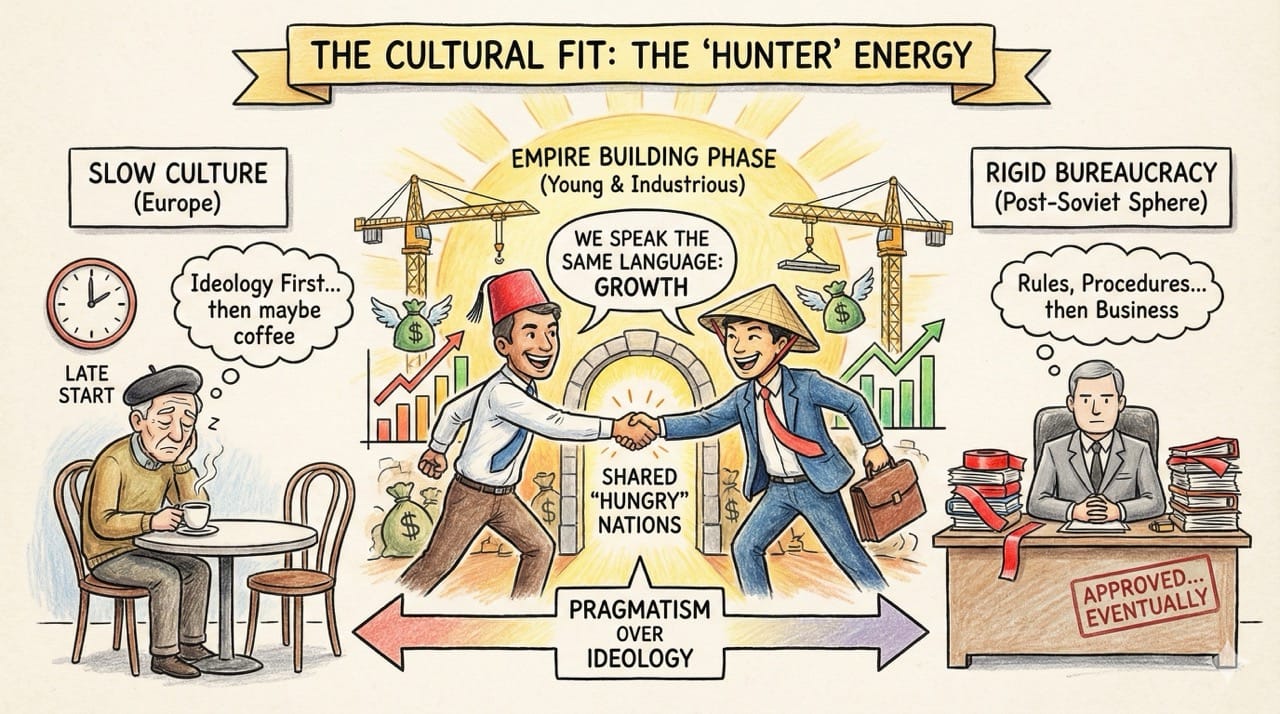
The Cultural Fit (The "Hunter" Energy)
I wrote previously about "Cultural Operating Systems." Turkey and Vietnam are identical.
They are both "Hungry" nations.
- They are in the "Empire Building" phase.
- They have young, industrious populations who wake up early and hustle.
- They value Pragmatism over Ideology in business.
Unlike the "Slow" cultures of Europe or the rigid bureaucracies of the post-Soviet sphere, a Turk and a Vietnamese businessperson speak the same language: Growth.
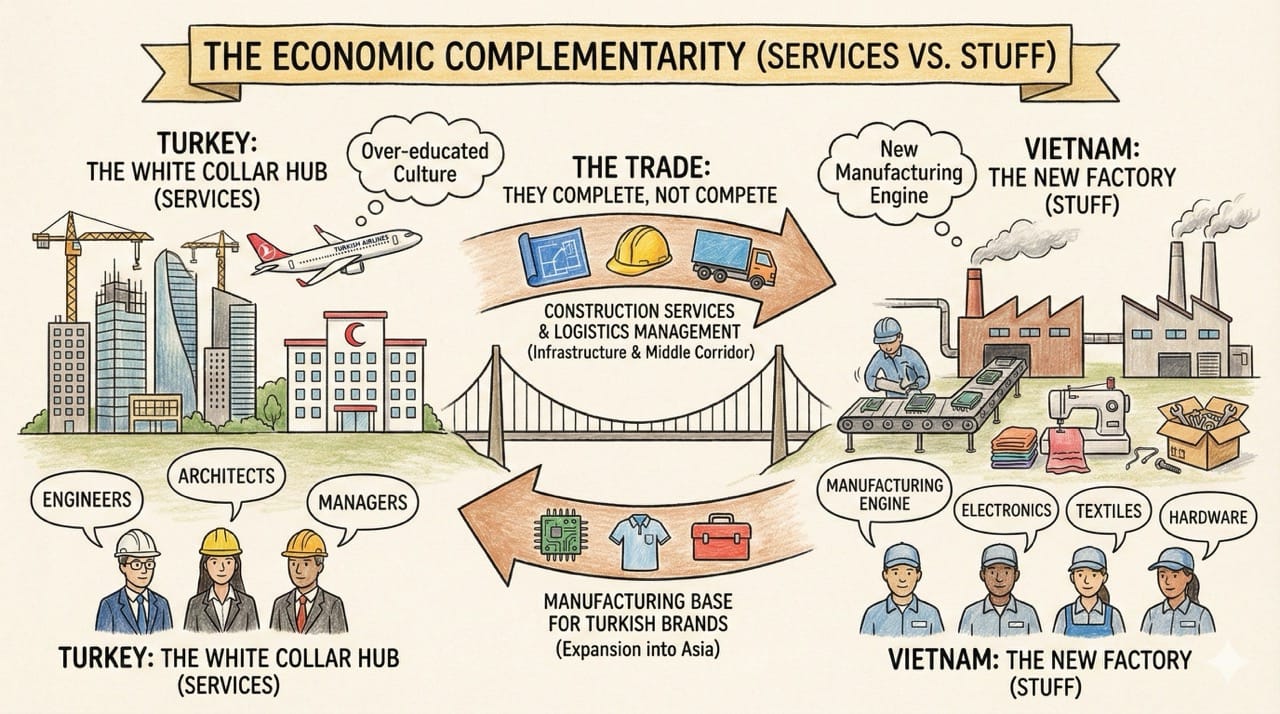
The Economic Complementarity (Services vs. Stuff)
Here is the alpha. They don't compete; they complete.
Turkey: The White Collar Hub Turkey has an "over-educated" culture. We have millions of engineers, architects, and managers. We excel at Services: Construction (contractors), Aviation (Turkish Airlines), and Healthcare.
Vietnam: The New Factory Vietnam is the new manufacturing engine of the world. They make the electronics, the textiles, and the hardware.
The Trade: Turkey shouldn't try to out-manufacture Vietnam.
Turkey should export Construction Services to build Vietnam's infrastructure (which is lagging).
Turkey should export Logistics Management to help Vietnam get its goods to Europe (via the Middle Corridor).
Vietnam becomes the manufacturing base for Turkish brands expanding into Asia.
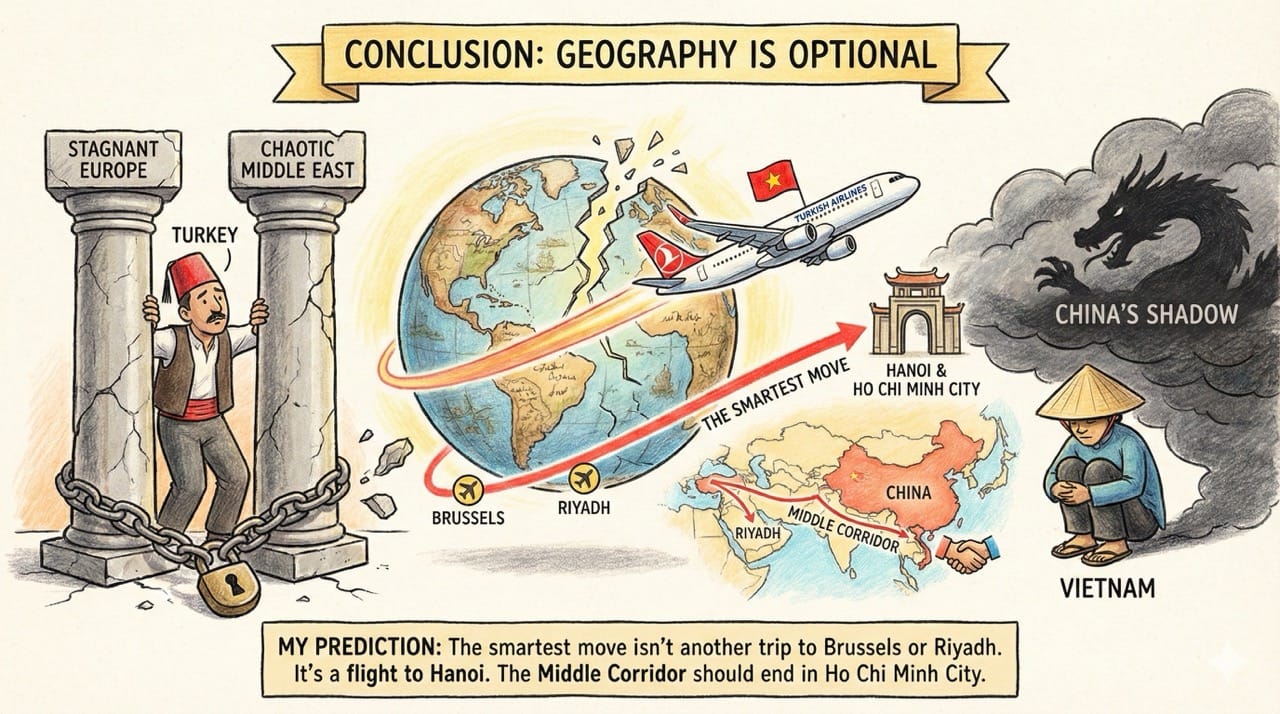
Conclusion: Geography is Optional
Geography is destiny only if you let it be.
Turkey is stuck between a stagnant Europe and a chaotic Middle East. Vietnam is stuck under the shadow of China.
My Prediction: The smartest move for Ankara isn't another trip to Brussels or Riyadh. It’s a flight to Hanoi. The "Middle Corridor" shouldn't stop at China; it should end in Ho Chi Minh City.