Beyond Oil: How the US-Israel-Iran Conflict Breaks the Global Supply Chain

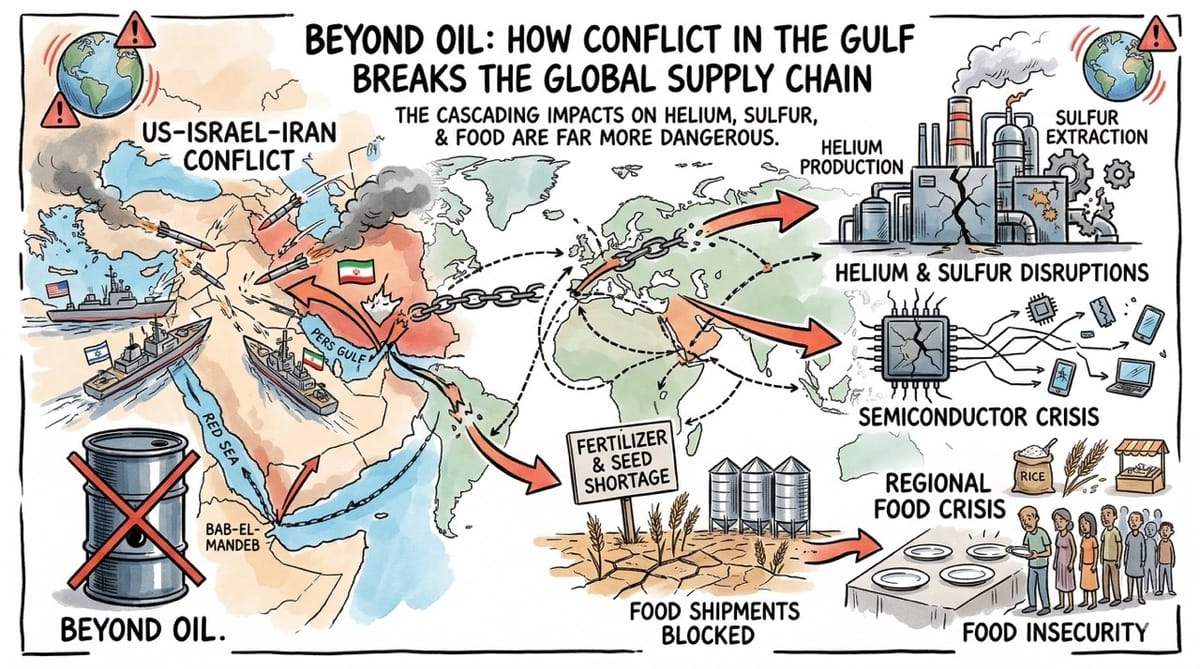
The disruption in the Gulf goes far beyond energy. It is actively suffocating the global semiconductor industry and creating a massive regional food crisis.
Inspiration: Analyzing geopolitical strategy from figures like Jake Sullivan and Jon Finer. Realizing that the secondary effects of the Middle East conflict on helium, sulfur, and food supplies are far more dangerous than the initial oil shock.
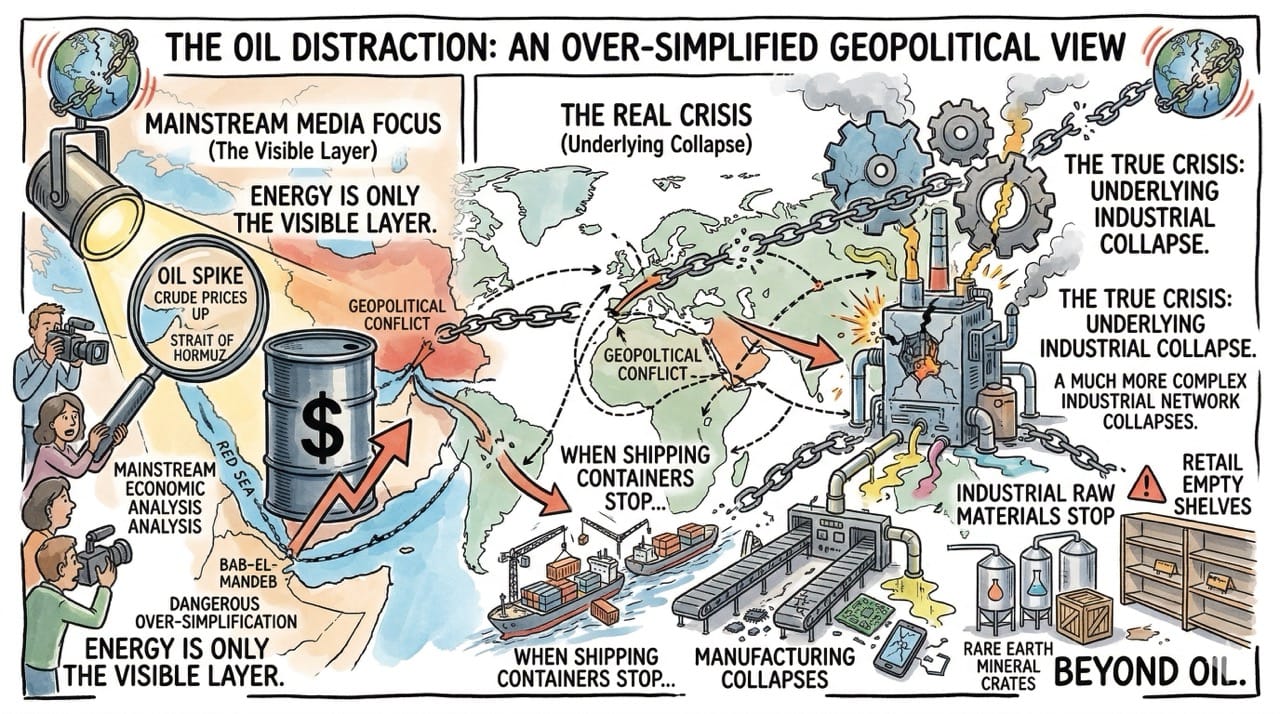
The Oil Distraction
The geopolitical conflict between the United States, Israel, and Iran has reached a boiling point.
Mainstream economic analysis is currently hyper-focused on the Strait of Hormuz and the inevitable spike in crude oil prices.
This is a dangerous oversimplification of the crisis.
Energy is only the most visible layer of the global supply chain.
When shipping containers stop moving through the Middle East, a much more complex industrial network completely collapses.
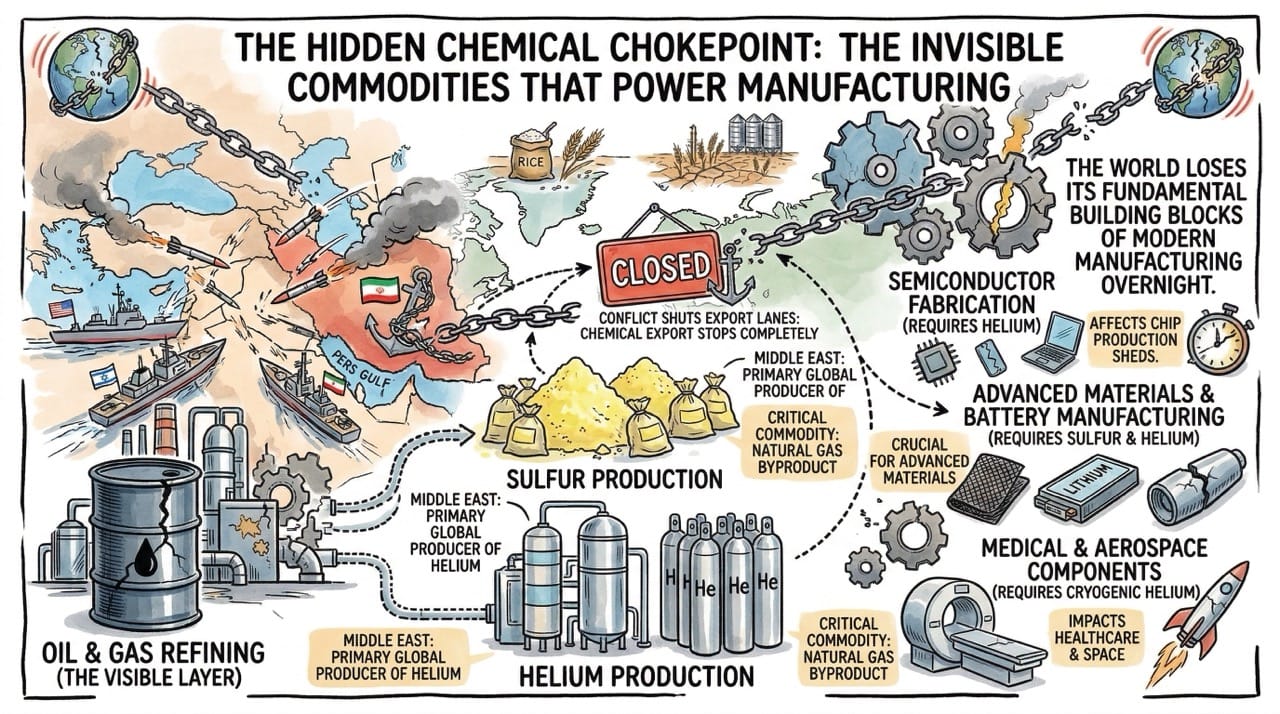
The Hidden Chemical Chokepoint
The Middle East is actually a critical supplier of invisible industrial commodities. Countries in the Gulf are primary global producers of sulfur and helium.
These resources are naturally occurring byproducts of their massive natural gas and oil refining operations.
When regional conflicts shut down commercial shipping lanes, the export of these crucial chemicals stops completely.
The world loses access to the fundamental building blocks of modern manufacturing overnight.
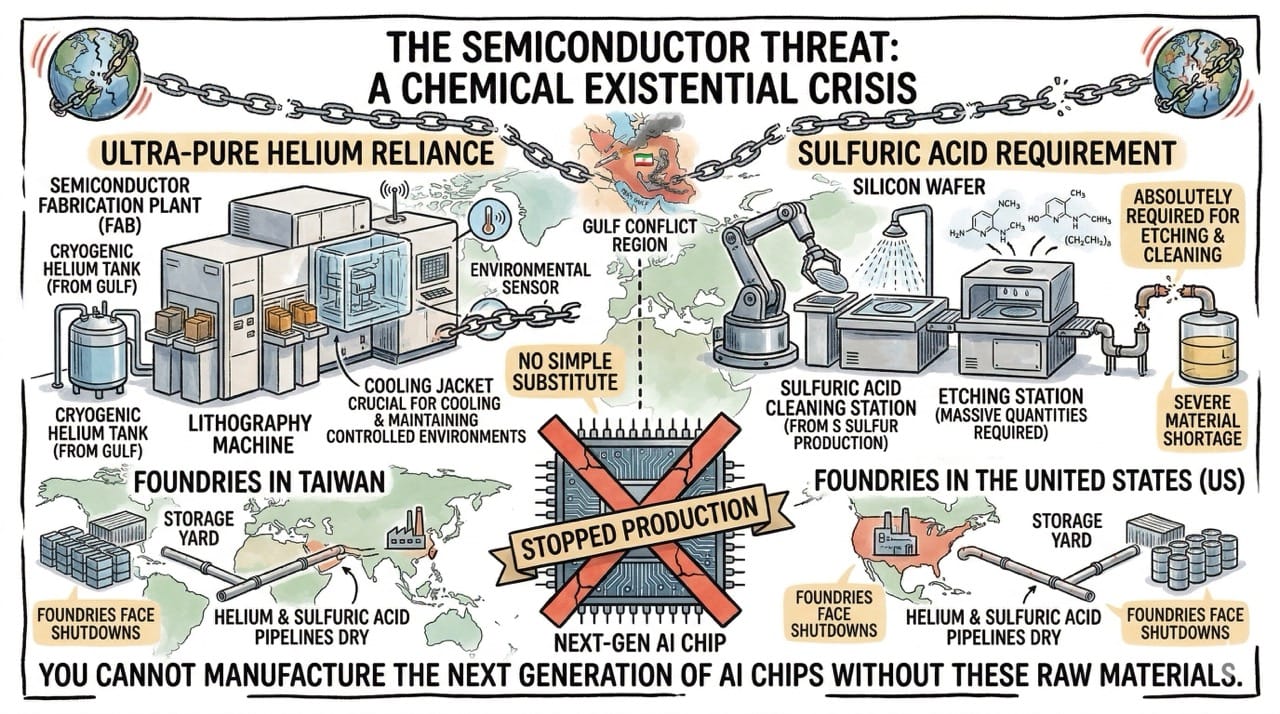
The Semiconductor Threat
This chemical bottleneck creates an immediate existential threat to the global technology sector.
The semiconductor industry relies heavily on ultra-pure helium for cooling and maintaining controlled manufacturing environments.
There is no simple substitute for helium in these highly sensitive fabrication plants.
Furthermore, massive quantities of sulfuric acid are absolutely required for etching and cleaning delicate silicon wafers.
A disruption in the Gulf means silicon foundries in Taiwan and the United States face severe material shortages.
You simply cannot manufacture the next generation of AI chips without these raw materials.
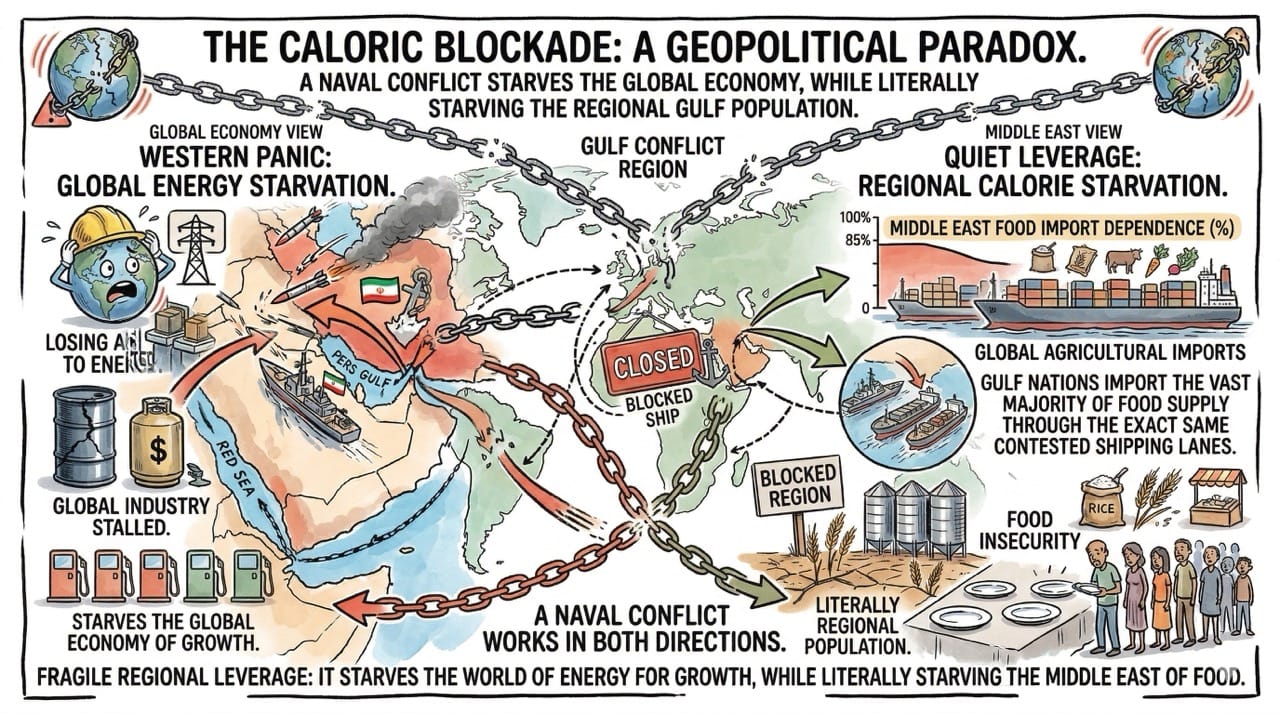
The Caloric Blockade
This disruption also creates a fascinating and terrifying geopolitical paradox.
While the Western world is panicking over losing access to Gulf energy, the Middle East is quietly losing access to imported calories.
Gulf nations import the vast majority of their food supply through these exact same contested shipping lanes.
A prolonged naval conflict works in both directions.
It starves the global economy of the energy needed for growth, while literally starving the regional population of agricultural imports.
The leverage in the region is much more fragile than it appears.
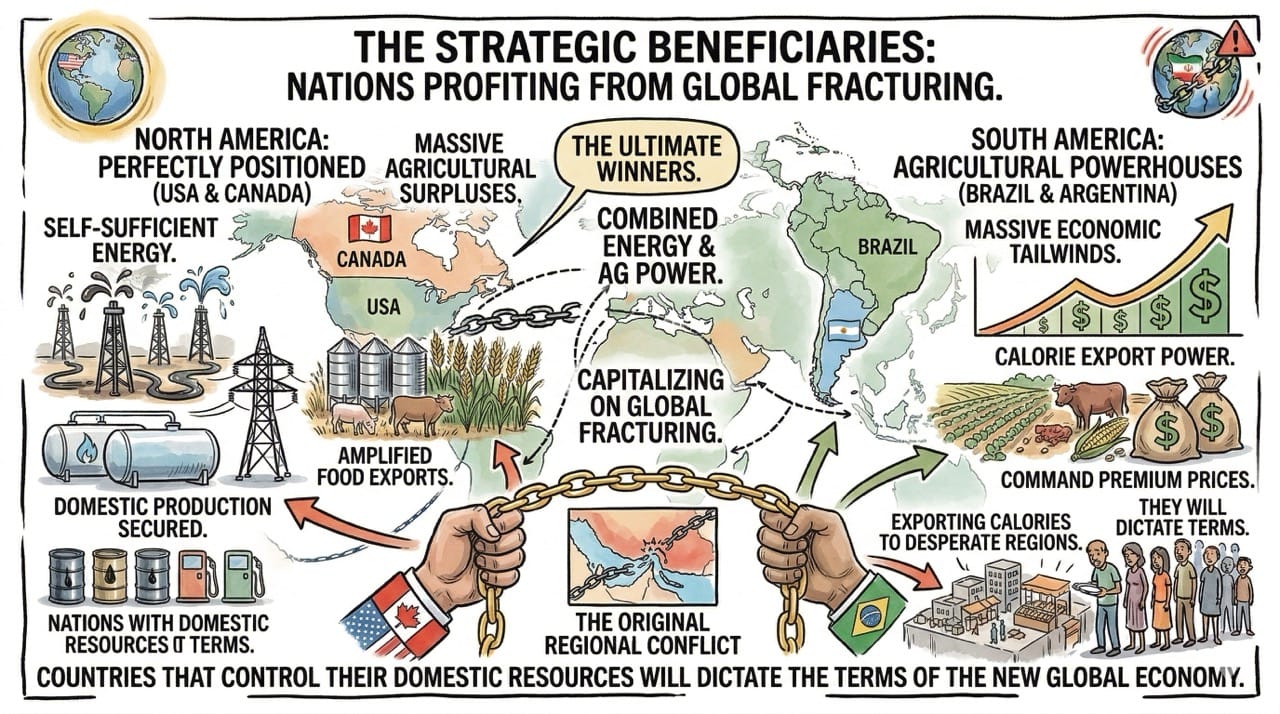
The Strategic Beneficiaries
This massive systemic shock will heavily reward a very specific set of nations.
Countries that possess combined domestic energy independence and massive agricultural surpluses are the ultimate winners.
The United States and Canada are perfectly positioned to capitalize on this exact global fracturing.
South American agricultural powerhouses like Brazil and Argentina will also see massive economic tailwinds.
They will command premium prices for exporting calories to desperate regions.
Countries that control their own domestic resources will dictate the terms of the new global economy.
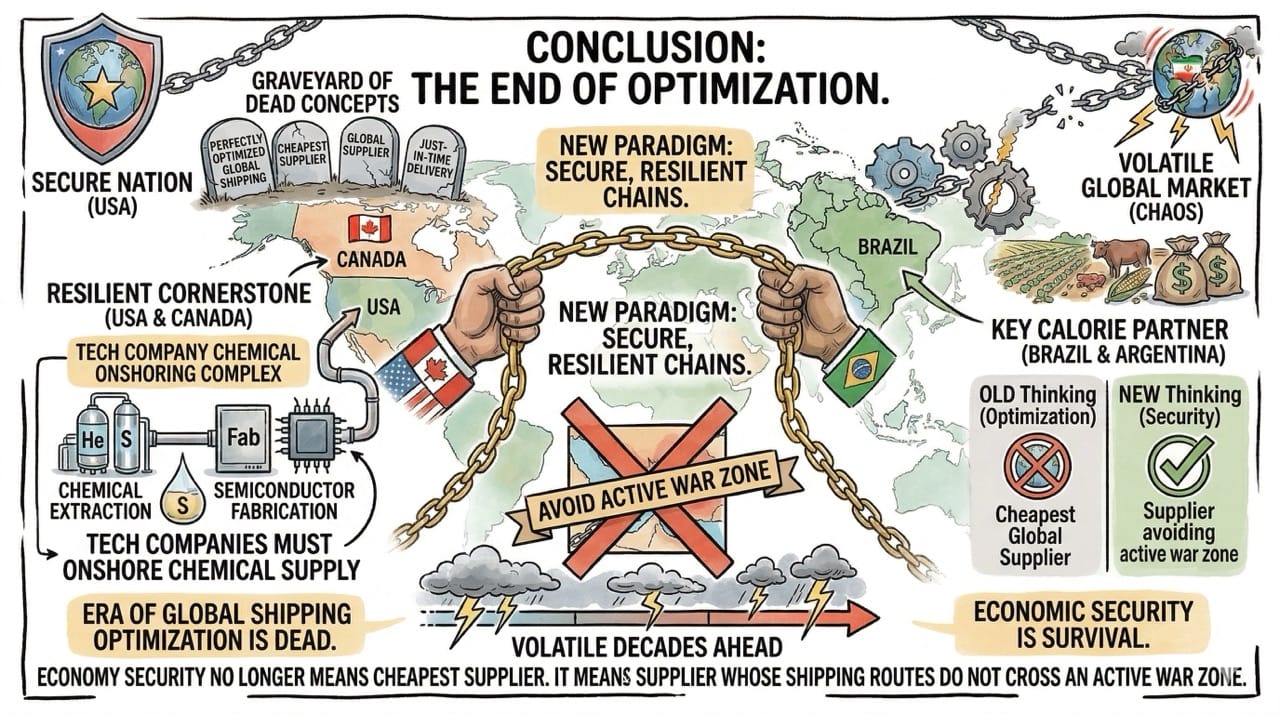
Conclusion: The End of Optimization
The modern era of perfectly optimized global shipping is officially dead.
Tech companies will be forced to entirely onshore their chemical supply chains to survive the volatile decades ahead.
Economic security no longer means finding the cheapest global supplier.
It means finding a supplier whose shipping routes do not cross an active war zone.