Apple’s Super-Cycle: First the Macs, Then the Phones
The iPhone upgrade cycle has stalled. But a new "Local AI" boom is driving massive sales of Mac Studios. This is the bridge to the real super-cycle: when Gemini forces everyone to buy an iPhone 17.

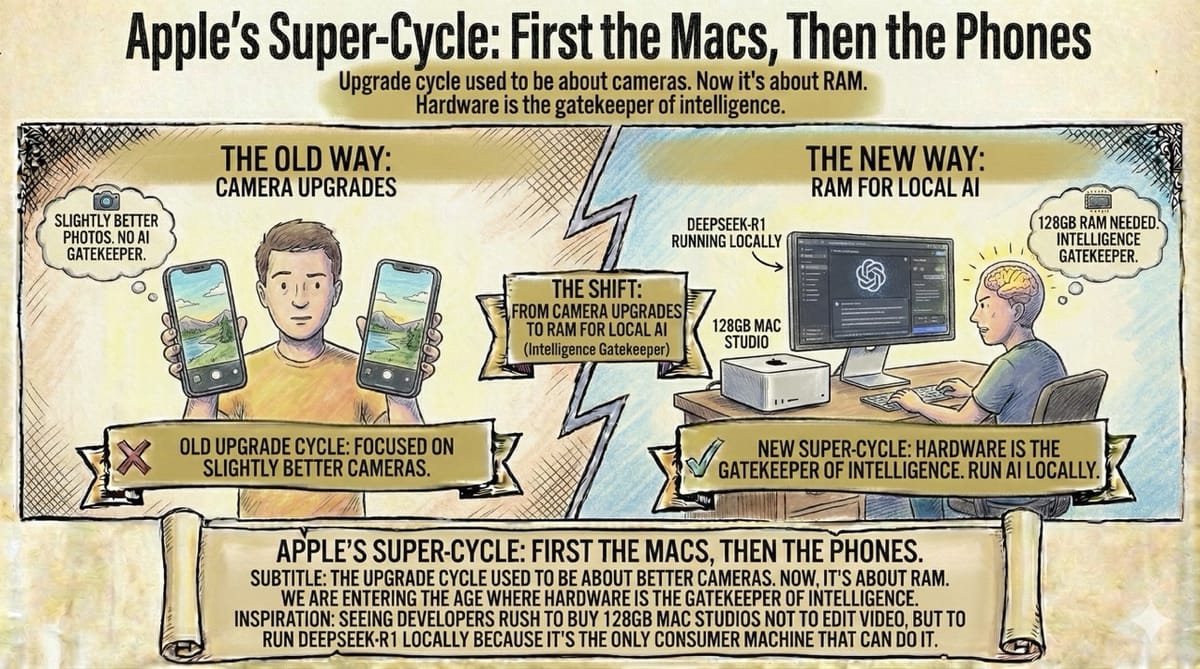
The upgrade cycle used to be about better cameras. Now, it’s about RAM. We are entering the age where hardware is the gatekeeper of intelligence.
Inspiration: Seeing developers rush to buy 128GB Mac Studios not to edit video, but to run DeepSeek-R1 locally because it's the only consumer machine that can do it.
A "Product Upgrade Cycle" is the time between buying new devices. It used to be 2 years. Recently, it stretched to 3 or 4 years.
Why? Because the iPhone 13 is basically the same as the iPhone 15 for 99% of users. The hardware outpaced the software.
Apple needed a reason for us to upgrade. AI just gave them one.
Phase 1: The Mac "AI Workstation" Boom
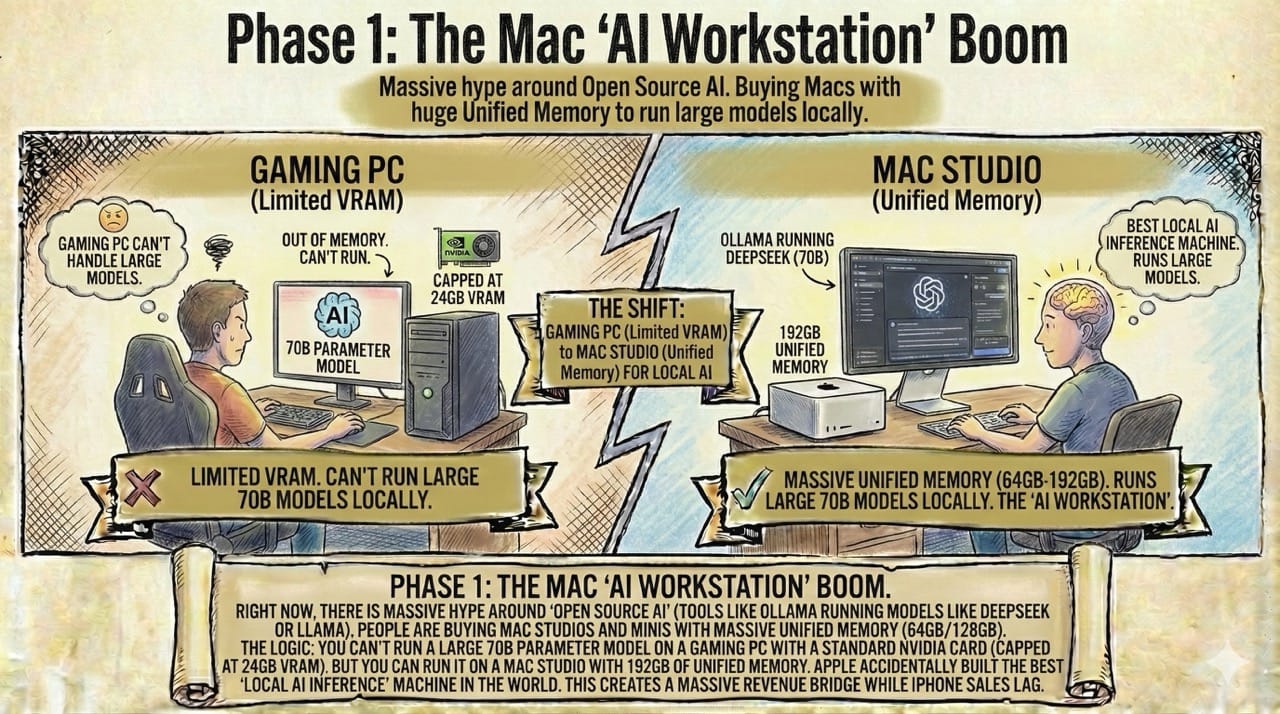
Right now, there is massive hype around "Open Source AI" (tools like Ollama running models like DeepSeek or Llama).
People are buying Mac Studios and Minis with massive Unified Memory (64GB/128GB).
The Logic: You can't run a large 70B parameter model on a gaming PC with a standard Nvidia card (capped at 24GB VRAM). But you can run it on a Mac Studio with 192GB of Unified Memory.
Apple accidentally built the best "Local AI Inference" machine in the world. This creates a massive revenue bridge while iPhone sales lag.
Phase 2: The "Gemini" Integration Bridge
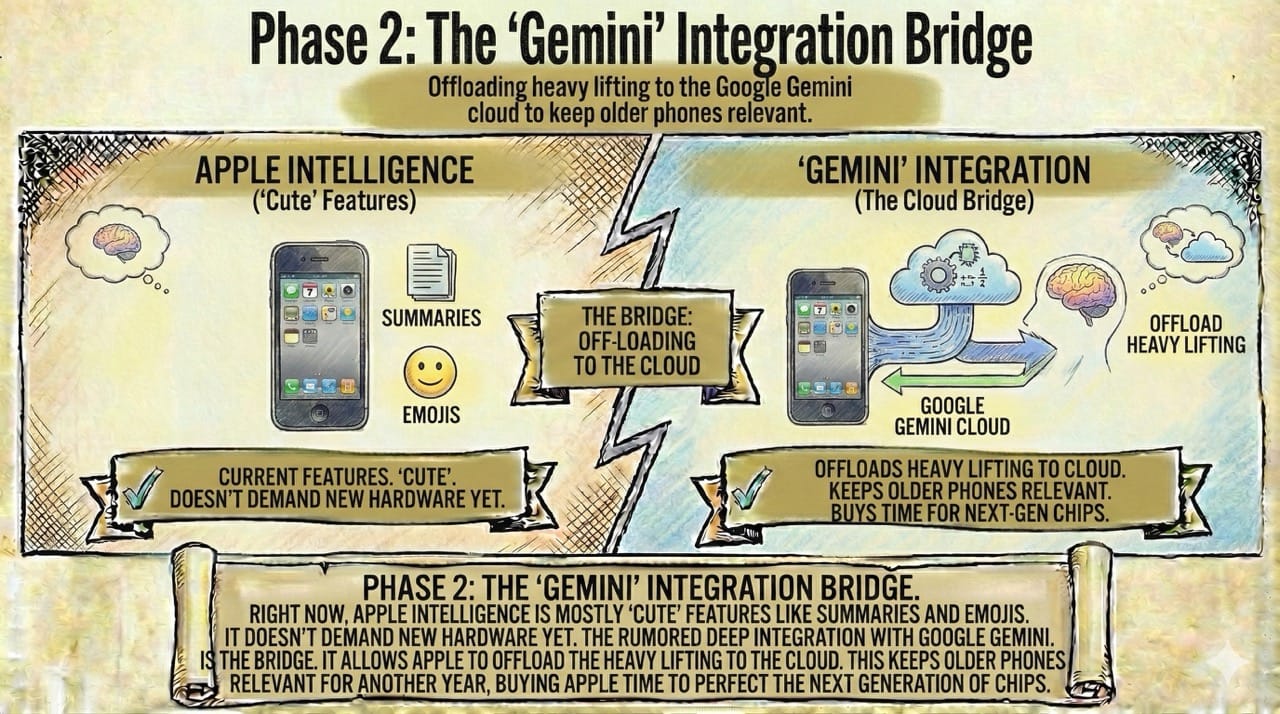
Right now, Apple Intelligence is mostly "cute" features like summaries and emojis. It doesn't demand new hardware yet.
The rumored deep integration with Google Gemini is the bridge. It allows Apple to offload the heavy lifting to the cloud. This keeps older phones relevant for another year, buying Apple time to perfect the next generation of chips.
Phase 3: The iPhone Super-Cycle
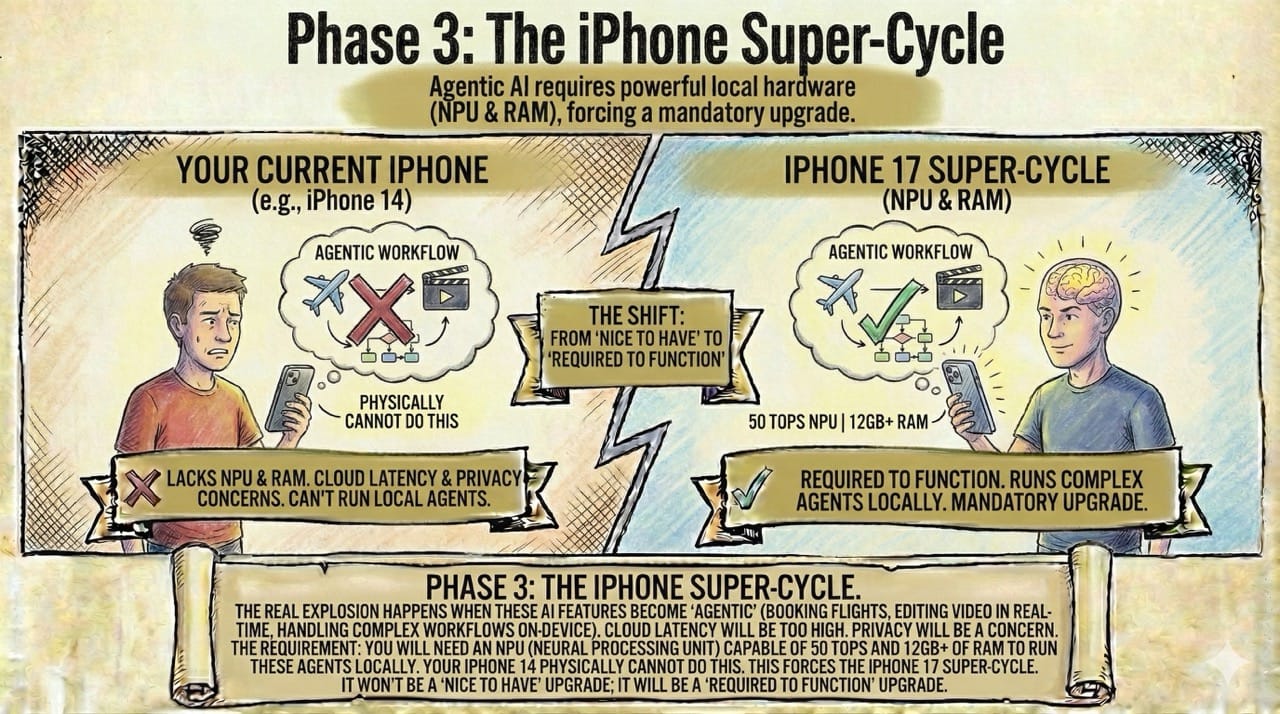
The real explosion happens when these AI features become "Agentic" (booking flights, editing video in real-time, handling complex workflows on-device).
Cloud latency will be too high. Privacy will be a concern.
The Requirement: You will need an NPU (Neural Processing Unit) capable of 50 TOPS and 12GB+ of RAM to run these agents locally.
Your iPhone 14 physically cannot do this. This forces the iPhone 17 Super-Cycle. It won't be a "nice to have" upgrade; it will be a "required to function" upgrade.
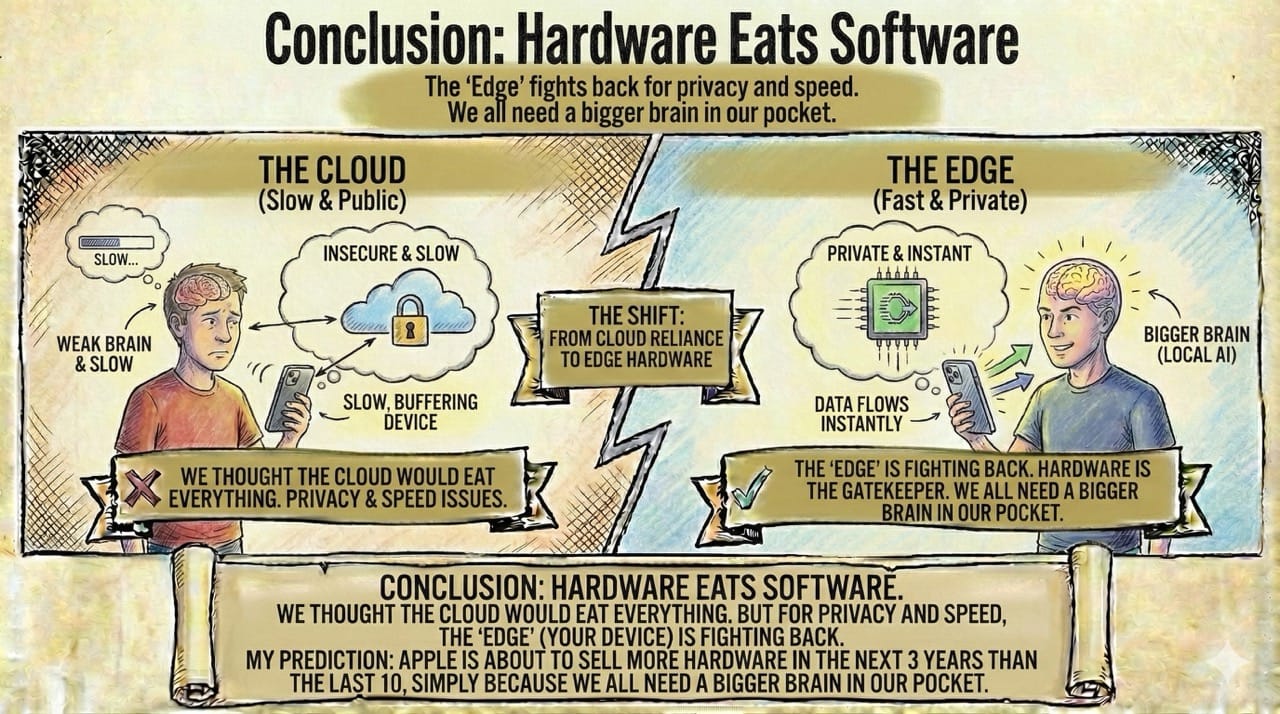
Conclusion: Hardware Eats Software
We thought the cloud would eat everything. But for privacy and speed, the "Edge" (your device) is fighting back.
My Prediction: Apple is about to sell more hardware in the next 3 years than the last 10, simply because we all need a bigger brain in our pocket.