Apple Creator Studio: The Botched Rollout of an Office Killer
Apple finally built a suite of productivity tools powerful enough to dethrone Microsoft Office. Unfortunately, a deeply flawed software deployment strategy is suffocating their massive artificial intelligence advantage.

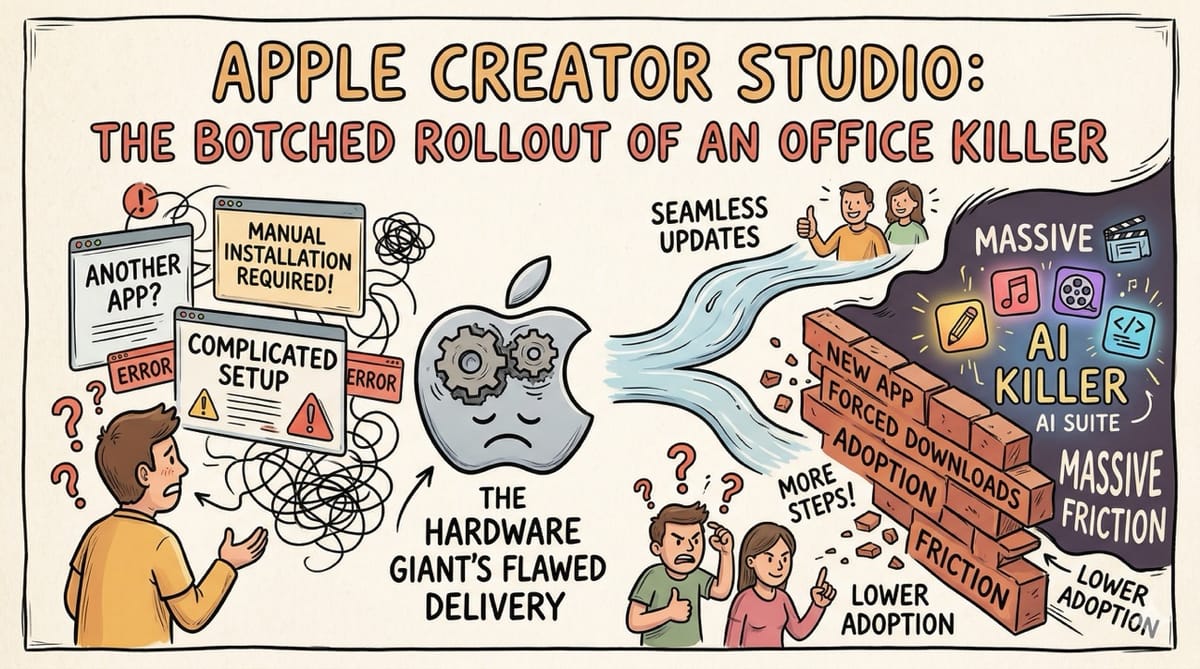
The hardware giant has the perfect AI software suite. They just forgot how to properly install it on their own devices.
Inspiration: Analyzing the confusing rollout of Apple Creator Studio. Realizing that forcing users to download a brand new application instead of seamlessly updating legacy software creates massive adoption friction.
The Redundant Install
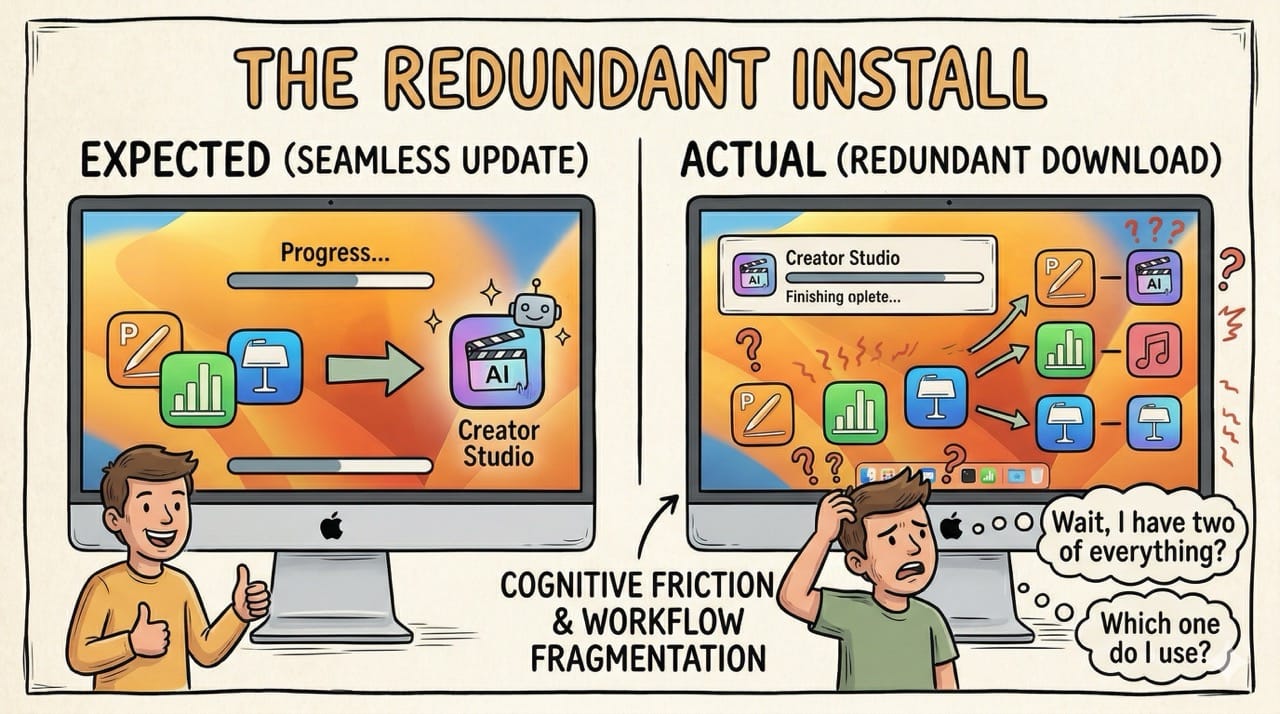
Apple recently introduced Creator Studio to modernize their legacy suite of Pages, Numbers, and Keynote.
The integration of advanced artificial intelligence makes this a highly capable enterprise powerhouse.
However, the current deployment strategy is bafflingly inefficient.
Instead of seamlessly upgrading the existing software, the system downloads Creator Studio as an entirely separate application.
Users are suddenly left with two competing versions of the exact same word processor on their hard drive.
This creates immediate cognitive friction and workflow fragmentation for the consumer.
The App Store Blindspot
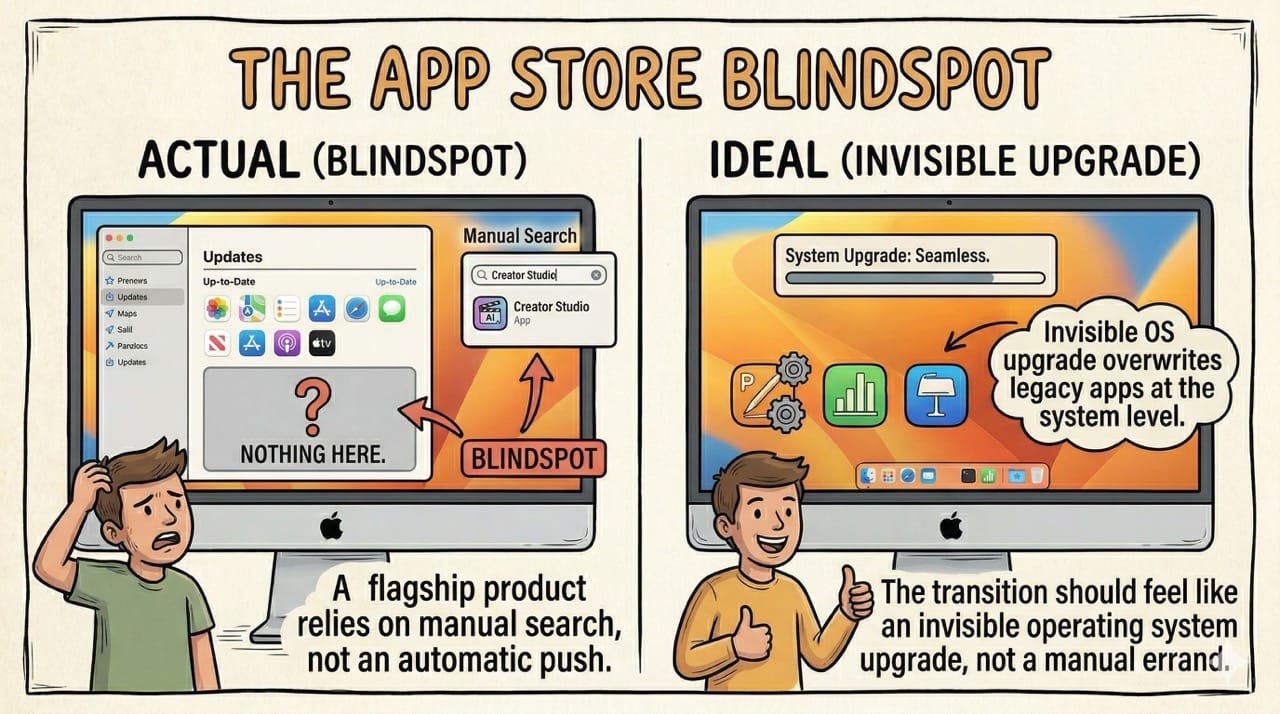
This redundancy stems from a structural flaw in the App Store ecosystem. Because Creator Studio is categorized as a completely new product, it does not appear in the standard updates tab.
Users have to actively search for the new software instead of receiving an automatic system push.
A technology giant cannot afford to rely on manual user discovery for a flagship product launch.
Apple should have designed the installation to quietly overwrite the legacy applications at the system level.
The transition should feel like an invisible operating system upgrade rather than a manual digital errand.
The Microsoft Office Threat
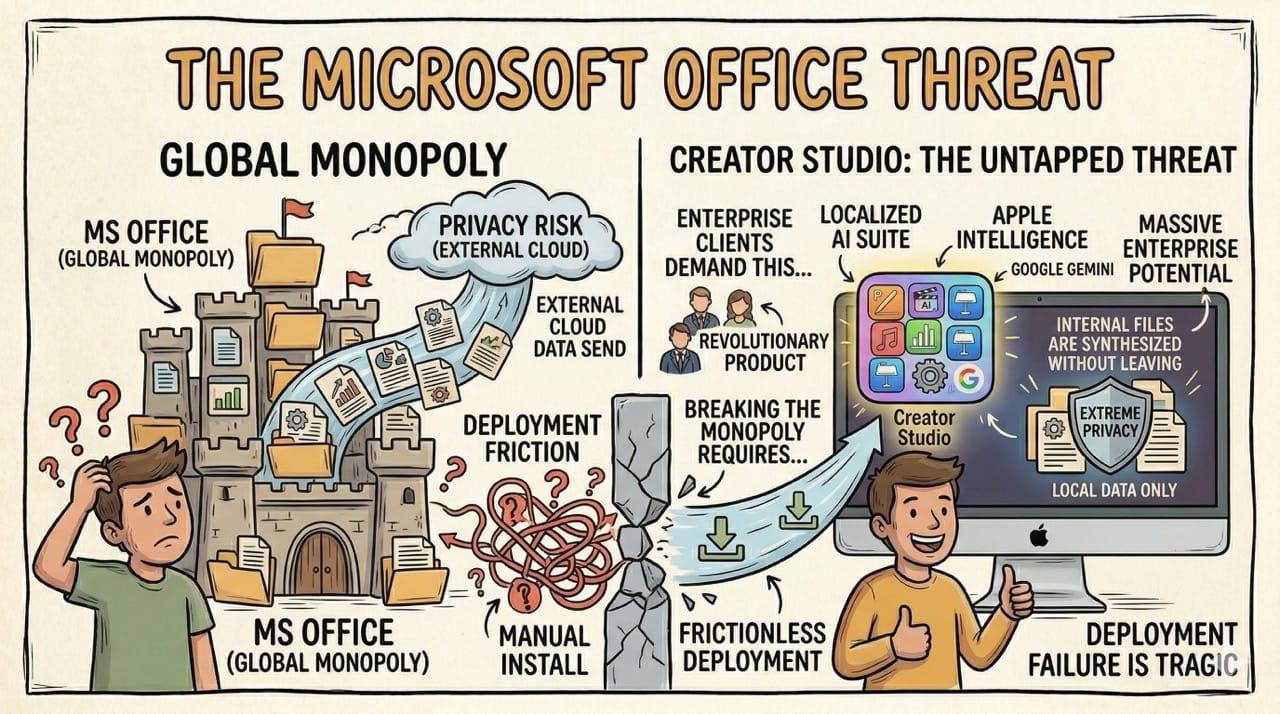
This deployment failure is tragic because the underlying product is genuinely revolutionary.
The upcoming integration of Apple Intelligence paired with Google's Gemini models provides unprecedented localized computing power.
Apple finally possesses the exact technological leverage needed to break the global monopoly of Microsoft Office.
Creator Studio can instantly synthesize local data without sending sensitive corporate documents to an external cloud.
This extreme privacy advantage makes it highly attractive to massive enterprise clients.
They simply need a frictionless way to actually get the software deployed onto their employee devices.
The Autonomous Desktop Unlock
The true potential of this suite lies in its future interoperability with autonomous desktop agents.
Developers are already building models like OpenClawd designed to operate directly within the macOS environment.
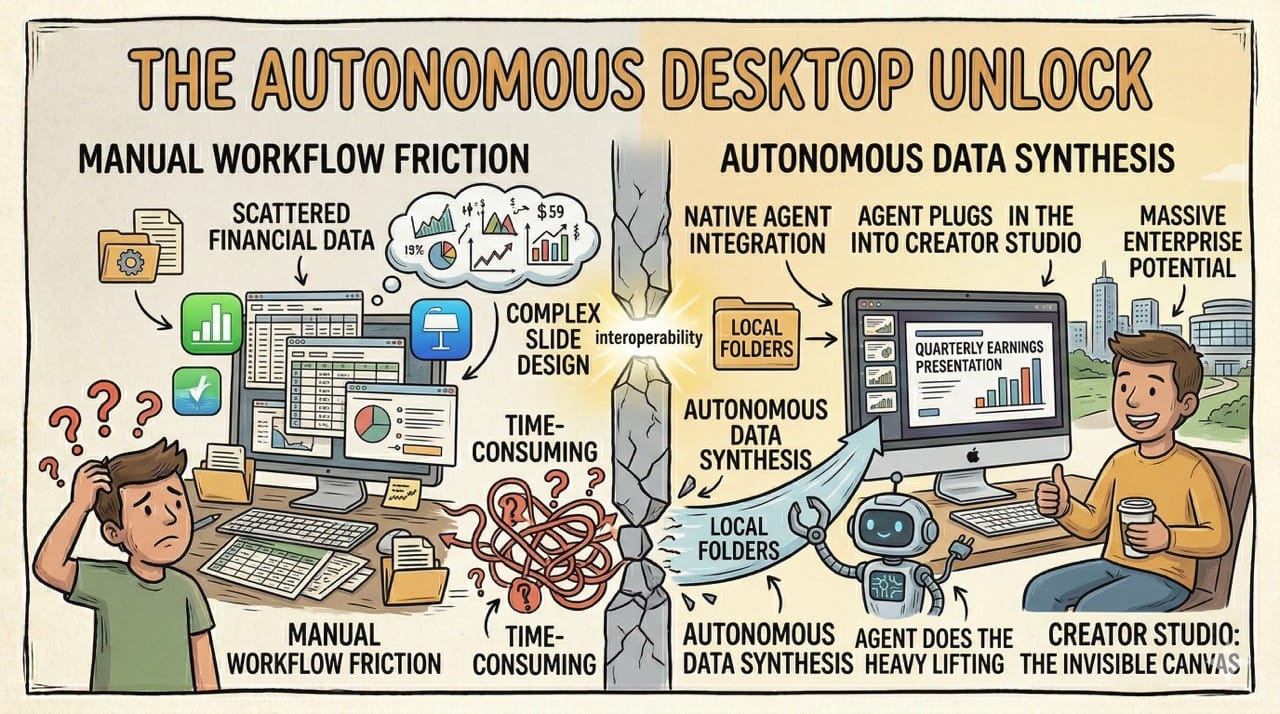
These native agents will eventually plug right into the Creator Studio infrastructure.
A performance marketer could soon ask a local agent to build a quarterly earnings presentation.
The agent would open Creator Studio, pull the necessary financial data from local folders, and design the slides entirely in the background.
The productivity software simply becomes the invisible canvas for the machine to do the actual heavy lifting.
Conclusion: Removing the Friction
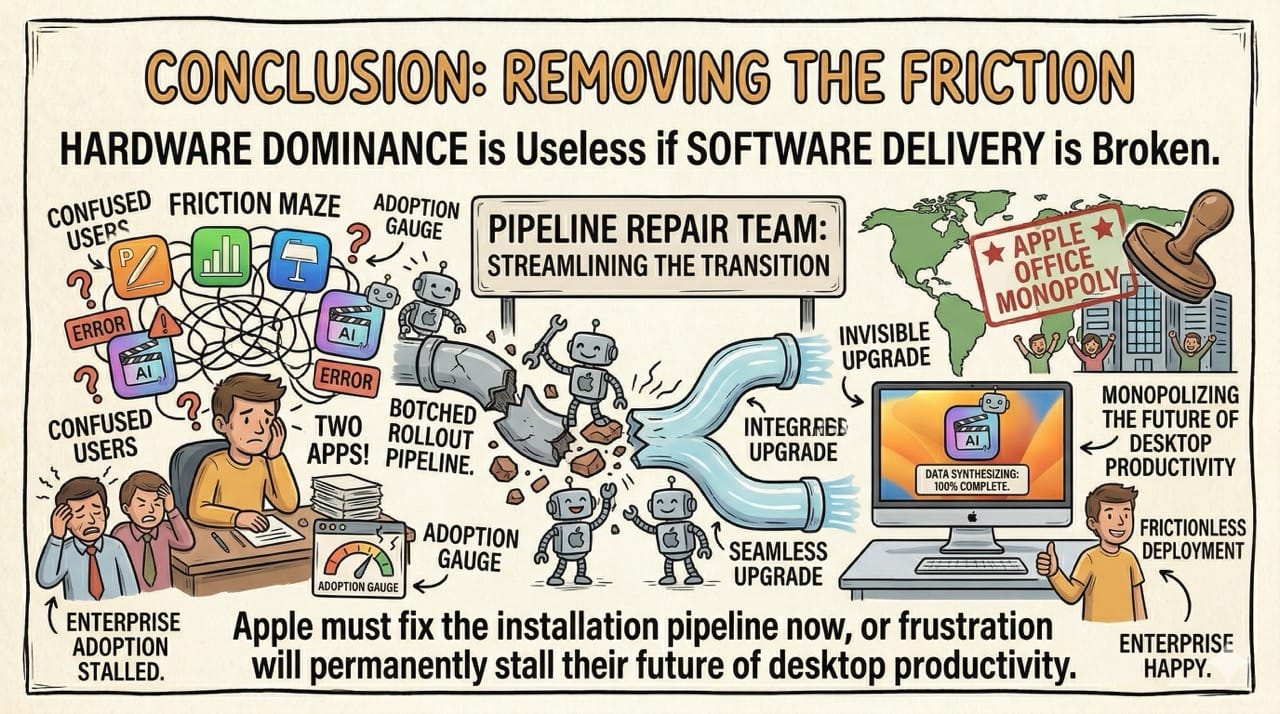
Hardware dominance is completely useless if the software delivery mechanism is broken.
Apple must streamline this transition before consumer frustration permanently stalls enterprise adoption.
If they can fix the installation pipeline, they have a clear path to monopolizing the future of desktop productivity.