AI Job Fragmentation: The Hidden Bull Case for Payroll Stocks
Everyone assumes artificial intelligence is going to eliminate millions of human jobs entirely. The reality is that AI will simply fragment full-time roles into multiple part-time gigs, creating a massive hidden tailwind for payroll software companies.

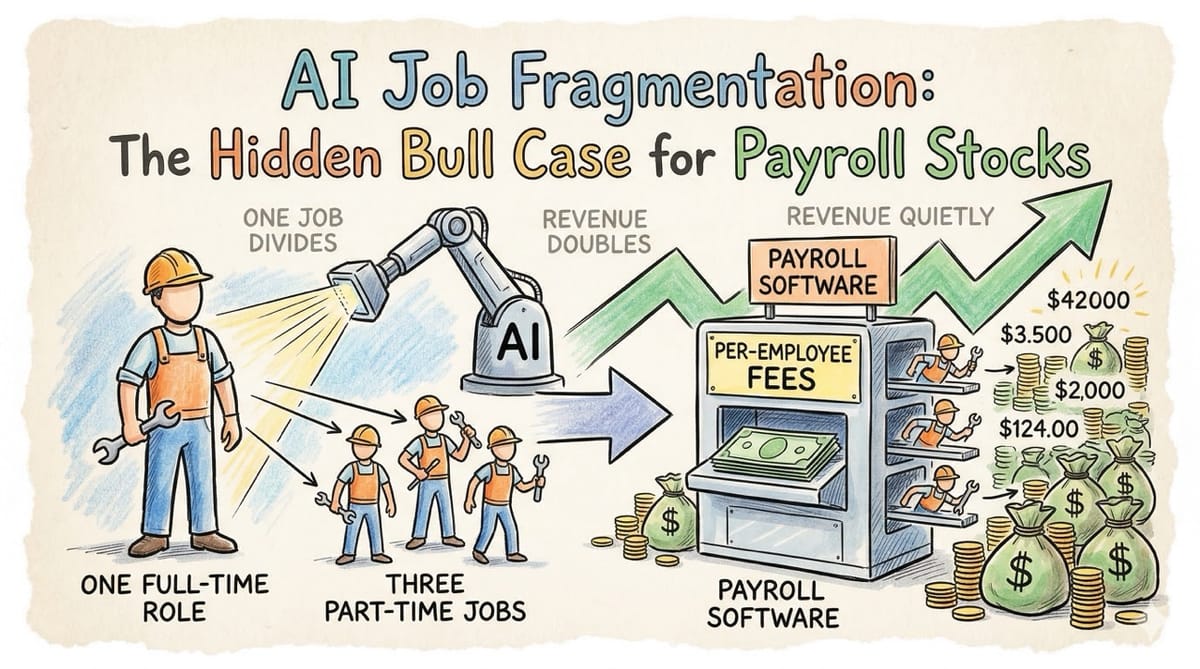
When artificial intelligence splits one full-time role into three part-time jobs, the companies charging per-employee software fees quietly double their revenue.
Inspiration: Analyzing the economic shift from job displacement to job fragmentation. Realizing that the per-employee pricing models of major HR technology companies create a massive structural advantage in an AI-driven labor market.
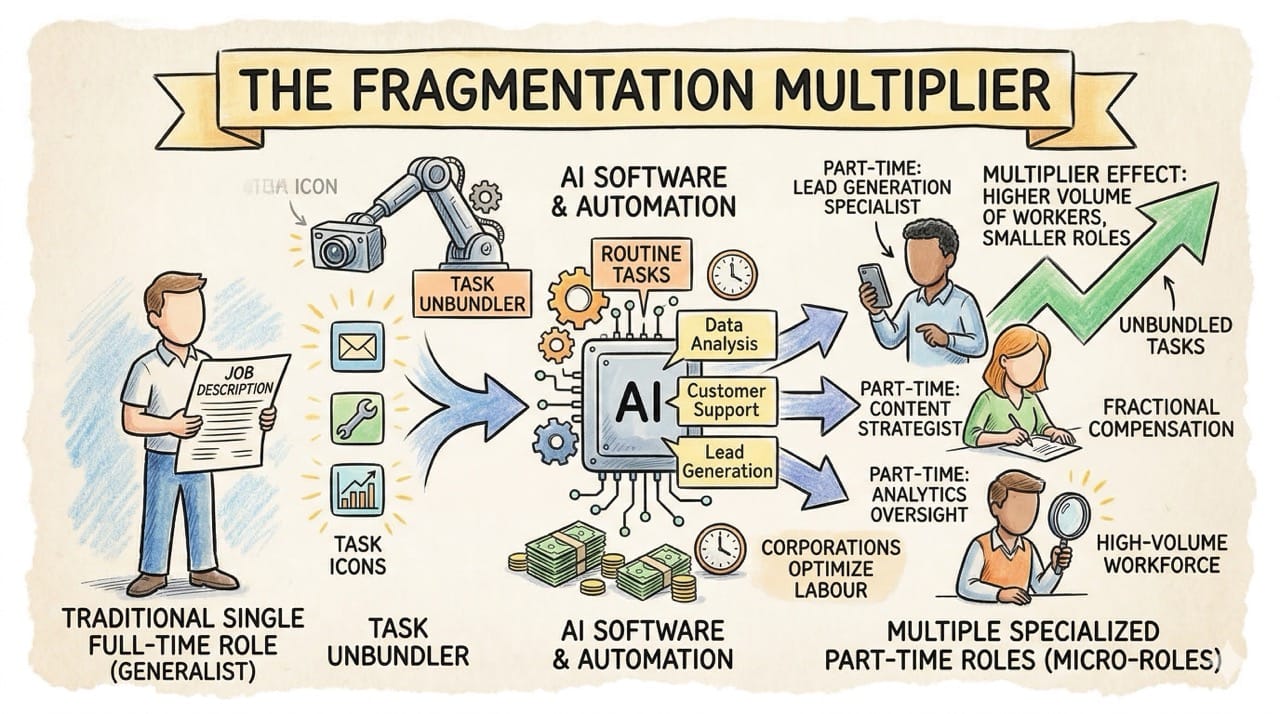
The Fragmentation Multiplier
The dominant narrative around artificial intelligence focuses entirely on total job displacement.
However, the immediate economic reality is pointing directly toward job fragmentation instead. AI tools excel at automating specific, repetitive tasks within a role rather than eliminating the human worker completely.
This allows corporations to unbundle traditional full-time jobs into highly specialized, fractional components.
A company can outsource the automated elements to software while hiring a part-time human specifically for the complex oversight.
The result is a labor market defined by a much higher volume of individual workers holding smaller, specialized roles.
The Headcount Revenue Trap
This transition to a fractional workforce creates an incredible structural advantage for human resources technology.
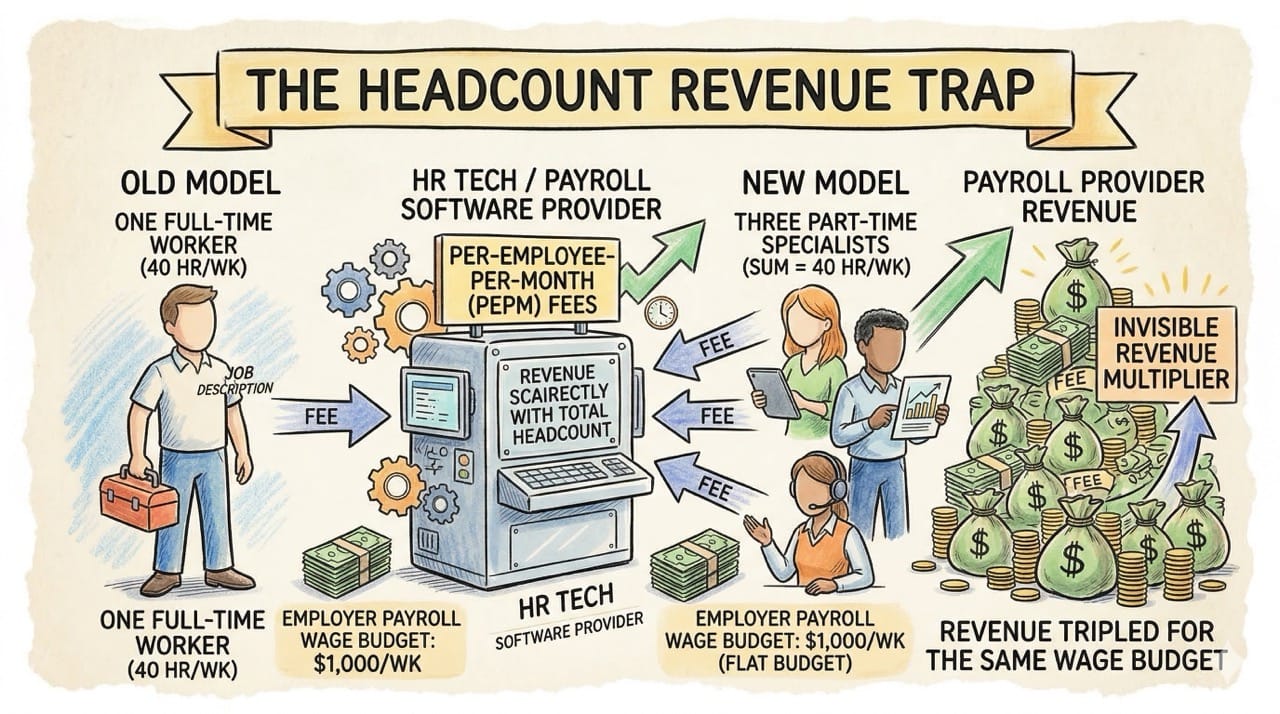
Almost every major payroll provider charges companies on a strict per-employee-per-month basis.
Their revenue scales directly with total headcount rather than the total hours worked.
If an employer replaces one full-time worker with three part-time specialists, their total wage budget might remain completely flat.
Yet, the payroll provider just tripled their software revenue for that specific department. This creates an invisible revenue multiplier baked directly into the core business model.

The Complexity Moat
A highly fragmented labor pool also introduces massive regulatory and administrative friction.
Hiring multiple part-time workers requires tracking more complex tax filings and navigating tricky healthcare eligibility thresholds.
Managing different geographic jurisdictions and employment classifications becomes an operational nightmare.
Corporations cannot manage this level of workforce diversity with simple spreadsheets.
They are forced to purchase even more software modules and compliance tools just to avoid massive legal penalties.
The payroll providers essentially act as the required tax on modern labor complexity.
The Pure Play Beneficiaries
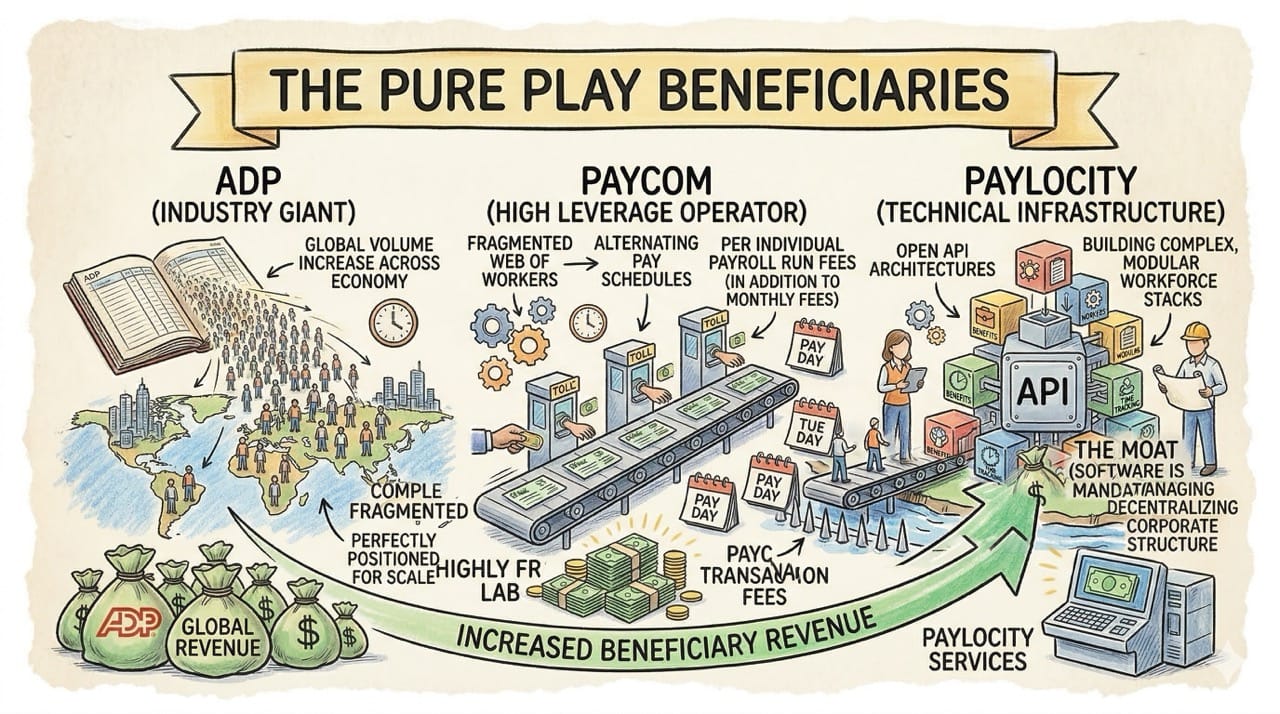
Industry giants like ADP are perfectly positioned to capture this massive volume increase across the global economy.
Smaller operators like Paycom stand to gain even more leverage because they often charge per individual payroll run in addition to their monthly fees.
When a company relies on a fragmented web of workers with alternating pay schedules, the software provider collects a toll on every single transaction.
Companies like Paylocity also benefit heavily by offering open API architectures.
These mid-market tools allow businesses to build highly complex, modular workforce stacks.
They provide the exact technical infrastructure needed to manage a rapidly decentralizing corporate structure.
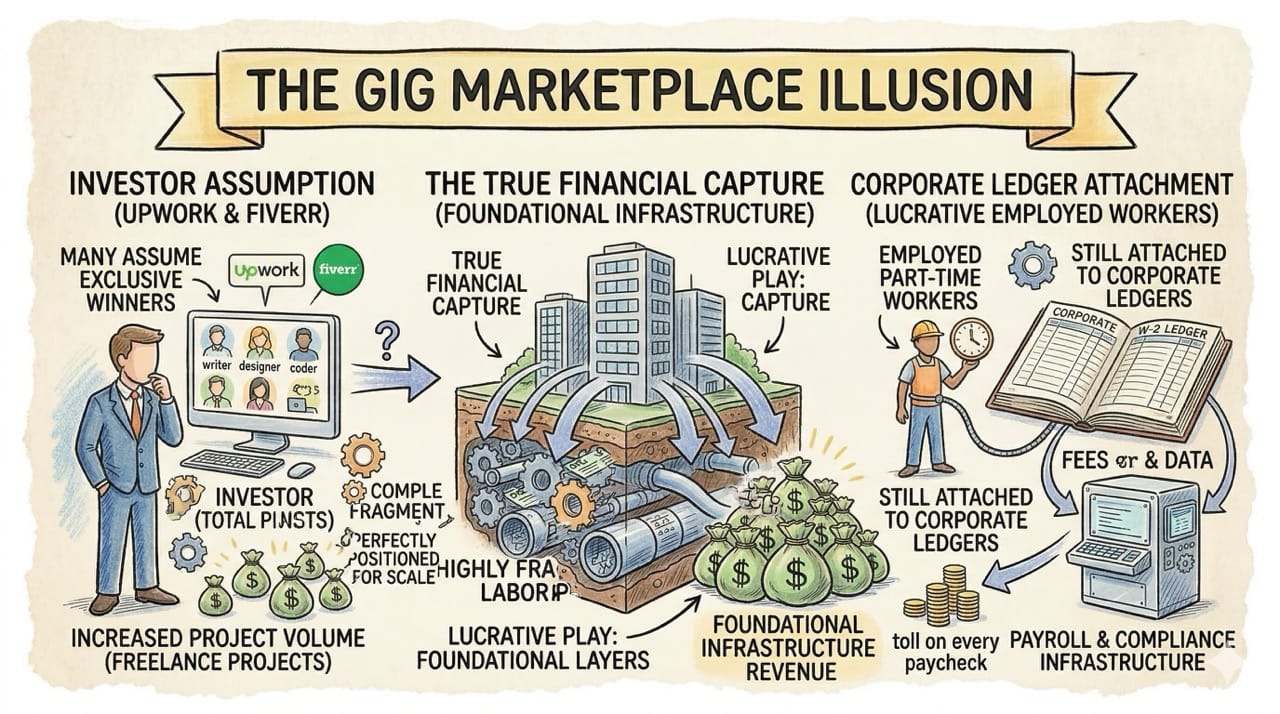
The Gig Marketplace Illusion
Many investors incorrectly assume freelance marketplaces like Upwork and Fiverr will be the exclusive winners of this transition.
While those platforms will certainly see increased project volume, the true financial capture happens at the foundational infrastructure layer.
The most lucrative play relies on employed part-time workers who are still attached to corporate ledgers.
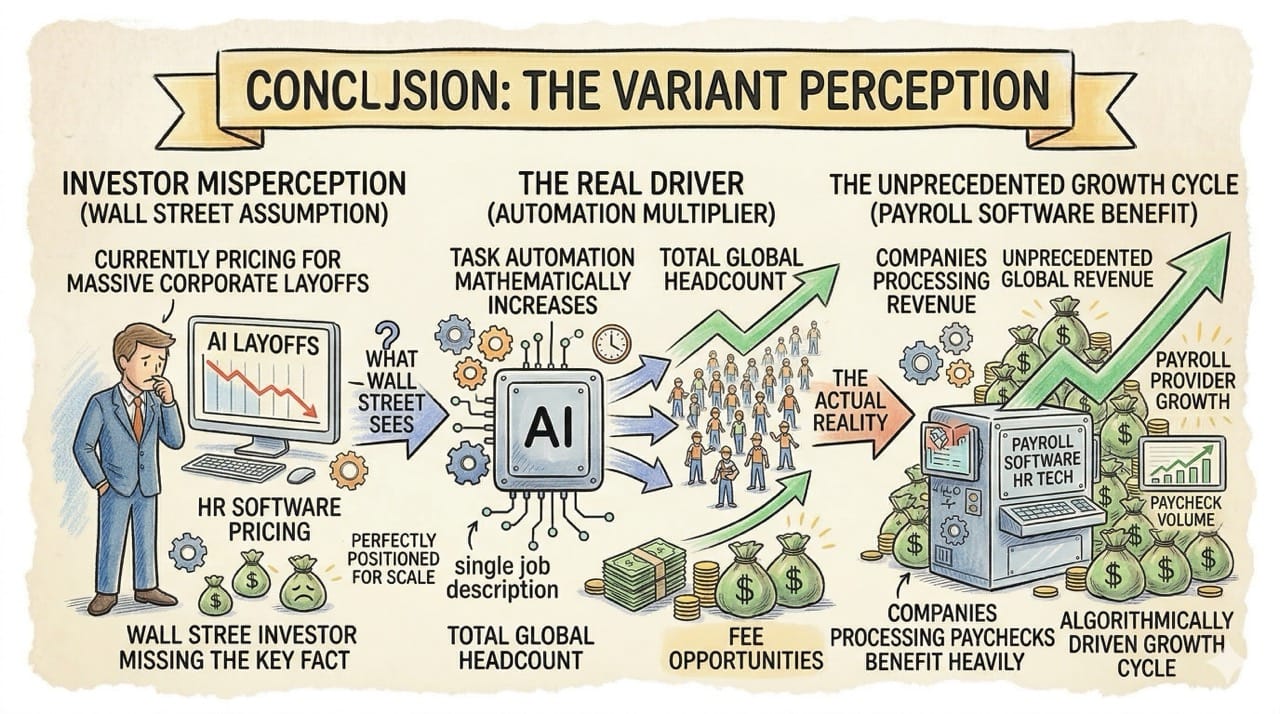
Conclusion: The Variant Perception
Wall Street is currently pricing human resources software as if AI will cause massive corporate layoffs.
They are completely missing the fact that task automation mathematically increases total global headcount.
The companies processing the paychecks are about to experience an unprecedented, algorithmically driven growth cycle.